Psst, ALL English words were made up at one time or another.
Shakespeare himself, the Great English Writer of Writers, made up words and phrases, many of which we still use today.


Psst, ALL English words were made up at one time or another.
Shakespeare himself, the Great English Writer of Writers, made up words and phrases, many of which we still use today.
There are so many Englishes out there. If yours isn’t mainstream, you likely have been looked down on for your English, particularly if you have a strong “foreign” accent or a Southern accent. But here’s Josh Lucas, playing Jake Perry in Sweet Home Alabama, with a good reminder:

We real cool. We
“We Real Cool” by Gwendolyn Brooks
Leave school.
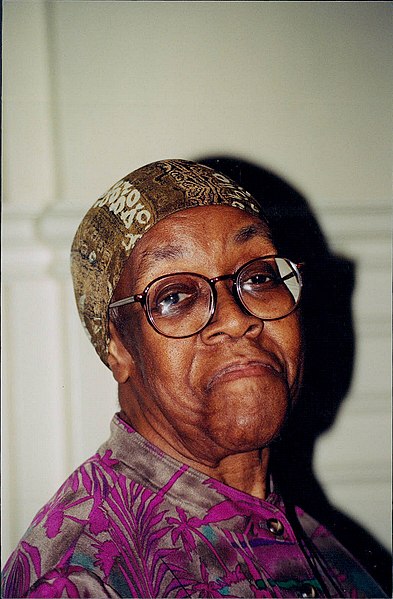
This begins Pulitzer prize winner Gwendolyn Brooks’ poem, “We real cool.”
Just from these two lines, I can visualize the characters who said them. The way they stand, the defiant looks on their faces. Even their ethnicity.
Can you imagine if she listened to the “rules” of English and wrote, “We are cool. We skipped school today.”
All the character and interestingness drops out of the words and leaves us with nothing but “correct” grammar.
One of the problems with insisting on proper English is that English is always changing. What is proper now might not be proper in ten years and definitely won’t still be correct over a large span of time. Check out these examples of English, some of which we can’t even read any more:

Hwæt. We Gardena in geardagum,
Beowulf
þeodcyninga, þrym gefrunon,
hu ða æþelingas ellen fremedon.
Beowulf, a thousand-year-old poem in English, not only is completely unreadable, but even has letters that we don’t use in English any more. Can you imagine if this were the “proper English” insisted upon?
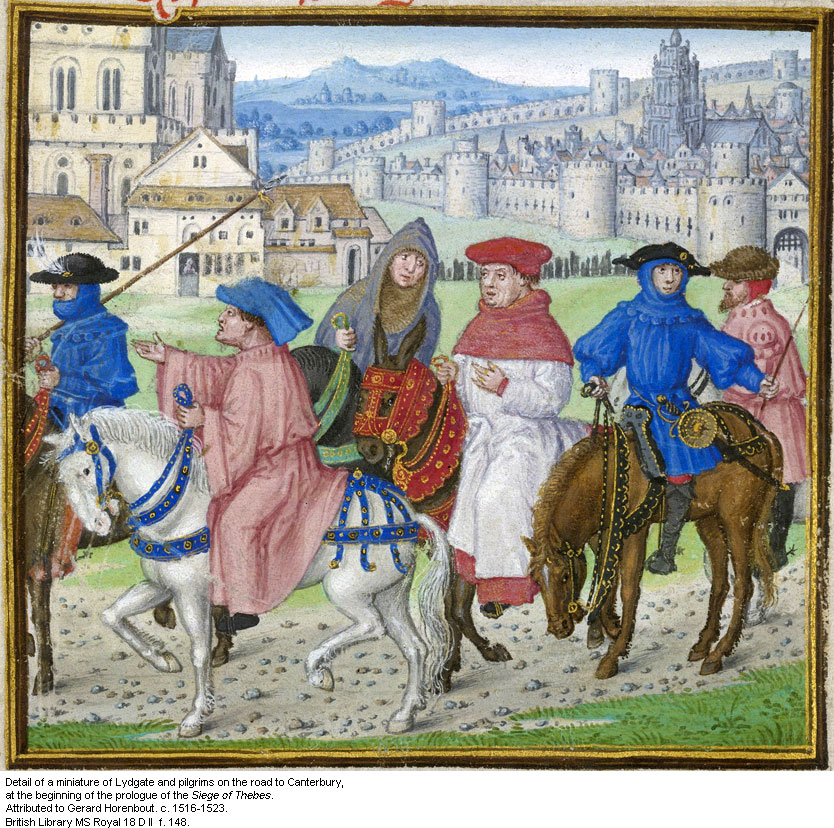
Whan that Aprill with his shoures sote
The Canterbury Tales by Chaucer
The droghte of Marche hath perced to the rote,
And bathed every veyne in swich licour,
Of which vertu engendred is the flour;
Here, at least, we are kind of, sort of, able to recognize some words, but 600-year-old The Canterbury Tales is hard to read, even with extensive footnotes. And this is ENGLISH.
Aroint thee, witch, aroint thee.
King Lear by William Shakespeare
Beats me what “aroint” means, but at least we can begin to recognize this kind of English, from Shakespeare’s King Lear. Even more recognizable is this line from Hamlet:
I’ll make a ghost of him that lets me.
Hamlet by William Shakespeare
But if you think Hamlet is saying “I’ll kill you if you let me do this,” you’d be wrong. “Let,” in this line, means the opposite of “let” in current English. Hamlet here is saying he’ll kill anyone that stops him.
Shakespeare also made up words.
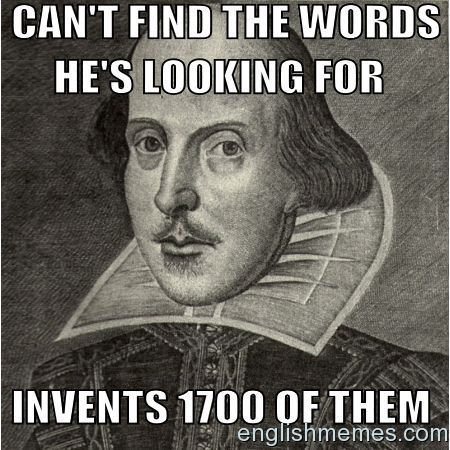
You know who else makes up words? All of us.
Here are some words the Oxford English Dictionary recently added to its dictionary, most of which you already know:
Okay, but what about when you’re writing a paper for school? Is all this making-up-words and changing language okay then? Stay tuned; I have a post on that coming up soon.
 Writing Hacks